Stand Up for Reality
This chapter is about the challenge of finding truth in a world full of misinformation, fake news, and social media noise. Jim Al-Khalili warns that, now more than ever, we need to develop critical thinking and information literacy to tell what's real from what's false. (p,141-154)
"The repercussions of the US presidential elections in 2020 will surely go down in history as a time when disinformation, driven largely by social media, came of age." (p.141)
He explains how disinformation, false rumors, conspiracy theories, and even sophisticated technology make it hard to tell truth from lies.
Main Story of the Chapter
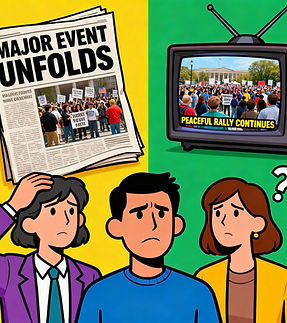.png)
News can be reported with different interpretations; different newspapers or networks might cover the same event in totally different ways (even if they're describing the same facts). (143-144)
.png)
False information (on purpose or by accident) is a growing problem, made worse by social media and new technology that makes it hard to spot fakes. (144)
.png)
It's becoming easier to create fake audio, video, and news, which makes it even harder to know what's true. (145)
.png)
Algorithms and AI are shaping what we see, making it possible to embed bias and push certain narratives, even more reason we need to be proactive about seeking truth. (p.148)
How to Stand Up for Reality
1. Take responsibility, as individuals and as a society, for sharing and believing truthful information, not just what's easiest to believe.
2. Use technology wisely to check facts, not just to spread information.
3. Develop your own 'trust index', always look for sources that can be checked and verified.
4 Demand critical thinking and information literacy for everyone, so people know how to judge what to believe and how to check the facts.
EXAMPLE
The US 2020 Presidential Election showed how millions of people believed rumors or lies because they were spread so widely on social media, even without any evidence.
"Accusations of fraud and cheating, mainly pushed out by President Trump himself over social media, were genuinely believed to be incontestable facts by millions of voters despite the lack of any credible evidence." (p.141)
During COVID-19, wild conspiracy theories about viruses and vaccines spread globally, showing how fast and damaging false claims can be.
"While this was going on, many more millions of people around the world subscribed to wild theories about the coronavirus..." (p.142)
What We Can Do
.png)
1.
Check multiple sources for the same news story
"...we are being urged, therefore, to get our news from multiple sources." (p.144)
.png)
2.
Always look for supporting evidence and judge its quality
"For example, we can take a leaf out of the scientific method. When information claims to come with supporting evidence, there will be the need to assess the quality or confidence level of that evidence..." (p.150)
.png)
3.
Build “information resilience” by practicing not just accepting, but testing claims for yourself
"What we need is for this information that helps: we have some level of 'statistics-smart'... better critical thinking skills, and information literacy." (p.152)
Bottom line
The world is full of fake news, rumors, and super-realistic fakes, but you CAN stand up for reality. Use your brain, check your sources, and ask for evidence. That’s how we make the world brighter, smarter, and less fooled by lies.